
Summer is the perfect time to turn your backyard into a space that feels like an extension of your home. Whether you want a place to unwind after a long day, host gatherings, or simply enjoy the outdoors, thoughtful upgrades can dramatically improve both comfort and functionality. The key is to approach improvements with a plan—focusing on features that enhance usability, safety, and visual appeal while aligning with your lifestyle.
From rethinking your layout to adding finishing touches that tie everything together, each upgrade plays a role in creating a cohesive and enjoyable outdoor environment. The following guide walks through practical, actionable strategies to help you make the most of your backyard this season.
1. Evaluate Your Current Backyard Layout Before Starting
Before investing in upgrades, take a step back and assess what you already have. A clear understanding of your current layout will help you avoid unnecessary expenses and make smarter design decisions.
Start by walking through your yard and asking a few key questions:
- Which areas feel cramped or underused?
- Where do people naturally gather?
- Are there safety issues that need attention?
- How does sunlight affect different areas throughout the day?
Mapping out your space—either digitally or on paper—can help you visualize opportunities for improvement. Consider how pathways, seating areas, and activity zones connect to each other. Ideally, your backyard should have a natural flow that makes movement easy and intuitive.
If your plans involve major structural changes, it may be worth consulting a swimming pool contractor. They can evaluate your property’s layout, drainage, and elevation to ensure your upgrades are both functional and compliant with local regulations.
Other helpful evaluation tips include:
- Check for uneven surfaces that could pose tripping hazards
- Identify areas where water collects after rain
- Take note of outdated materials that may need replacement
- Consider privacy needs from neighboring properties
This initial assessment sets the foundation for every decision that follows.
2. Upgrade Your Pool Area With Functional Enhancements
Enhancing your pool area goes beyond aesthetics—it’s about improving the overall experience. Thoughtful upgrades can make your pool more enjoyable, safer, and easier to maintain.
One popular addition is a pool waterfall, which introduces both visual appeal and a calming sound element. It can transform a standard pool into a more relaxing, resort-like environment. Beyond aesthetics, moving water also helps with circulation.
Additional upgrades to consider:
- Install LED lighting for better visibility and ambiance at night
- Add built-in seating or tanning ledges for relaxation
- Upgrade ladders and handrails for improved accessibility
- Incorporate automation systems for easier control of features
Functionality should always guide your decisions. For example, if you frequently host guests, consider adding features that support entertaining, such as nearby seating areas or integrated sound systems.
When planning upgrades, think about long-term maintenance and energy efficiency. Modern equipment and features often reduce operating costs while improving performance, making them a worthwhile investment.
3. Improve Water Quality With Smarter Maintenance Habits
Clean, balanced water is essential for both safety and enjoyment. Establishing consistent maintenance routines helps prevent problems before they start.
Begin with a basic weekly schedule:
- Test water levels regularly to monitor pH, alkalinity, and sanitizer levels
- Adjust pool chemicals as needed to maintain balance
- Skim debris and clean filters to ensure proper circulation
Understanding how environmental factors affect water quality is also important. Heat, rainfall, and heavy usage can all impact chemical balance, requiring more frequent adjustments.
There are times when professional assistance is beneficial. Hiring pool services can help with tasks like deep cleaning, equipment inspections, and seasonal maintenance. Professionals can also identify issues that may not be immediately visible, such as early signs of equipment failure.
To simplify maintenance:
- Use automatic chlorinators or salt systems
- Invest in a robotic cleaner
- Keep a log of test results to track trends over time
Consistent care not only extends the life of your pool but also ensures a safe and pleasant swimming environment.
4. Refresh Your Poolside Surface for Safety and Style
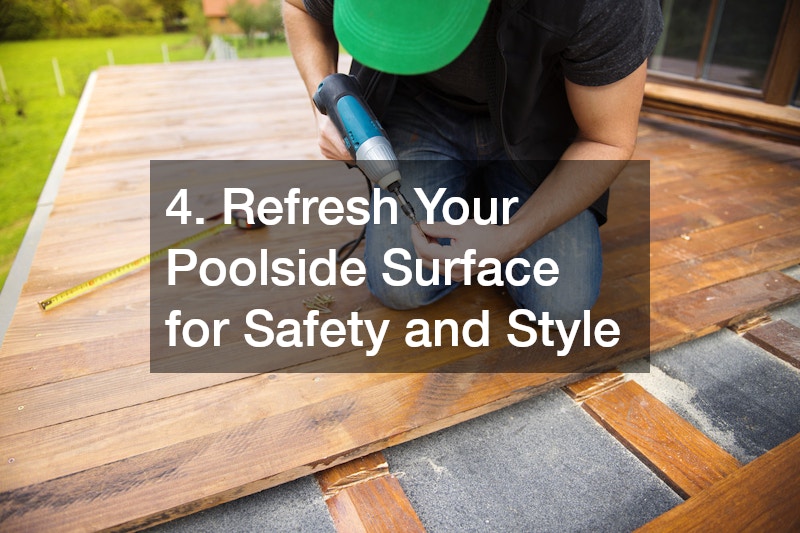
Your poolside surface plays a major role in both safety and appearance. Over time, exposure to sun, water, and foot traffic can cause wear and tear that needs to be addressed.
Start by inspecting your pool deck for:
- Cracks or uneven areas
- Fading or discoloration
- Slippery surfaces that increase fall risk
If repairs are needed, resurfacing can provide a fresh look while improving durability. Options include:
- Textured concrete coatings for added traction
- Pavers for a more decorative appearance
- Natural stone for a high-end finish
When choosing materials, consider how they perform in heat and moisture. Surfaces that stay cool underfoot and resist slipping are ideal for pool areas.
Design also matters. Coordinating colors and patterns with your home’s exterior creates a more cohesive look. Adding subtle variations in tone or texture can elevate the overall design without overwhelming the space.
A well-maintained surface not only enhances safety but also sets the tone for the entire backyard.
5. Build a Comfortable Outdoor Living Space With Decking
A well-designed deck expands your usable space and provides a dedicated area for relaxation and entertainment. The key is to create zones that support different activities.
Working with a composite deck builder can be especially beneficial if you want a low-maintenance solution. Composite materials resist moisture, fading, and insect damage, making them ideal for outdoor environments.
When planning your deck, think about:
- Seating arrangements for both small gatherings and larger groups
- Shade options such as pergolas or umbrellas
- Built-in features like benches or storage
Material selection is crucial. Choose options that:
- Stay cooler in direct sunlight
- Resist warping and cracking
- Complement your home’s style
Layout tips include:
- Position seating areas to take advantage of views or shade
- Allow enough space for easy movement between zones
- Integrate lighting for evening use
A thoughtfully designed deck can become the centerpiece of your backyard, offering both comfort and versatility.
6. Expand Your Backyard With a Functional Patio Area
Adding a patio creates another layer of usability, giving you a space that’s perfect for dining, lounging, or hosting events.
Professional local paver patio installation ensures your patio is built to last. Proper installation addresses critical factors like drainage, leveling, and material stability.
When designing your patio:
- Choose a layout that complements existing features
- Select materials that match your aesthetic preferences
- Consider how the space will be used throughout the day
Popular patio features include:
- Outdoor kitchens or grilling stations
- Fire pits for evening gatherings
- Built-in seating walls for added functionality
Durability is key. Pavers are a popular choice because they:
- Withstand temperature changes
- Are easy to repair or replace
- Offer a wide range of design options
Make sure your patio connects seamlessly with other areas of your yard. Clear pathways and consistent design elements help create a unified look.
7. Keep Your Backyard Comfortable With Pest Prevention
Nothing disrupts outdoor enjoyment faster than pests. Taking proactive steps to manage them can make a significant difference in how often you use your backyard.
Effective mosquito control starts with eliminating breeding grounds:
- Remove standing water from containers, gutters, and low spots
- Keep grass trimmed and landscaping well-maintained
- Use plants that naturally repel insects
Additional strategies include:
- Installing outdoor fans to deter flying insects
- Using screened enclosures in seating areas
- Adding citronella candles or torches for localized protection
Consistency is important. Regular maintenance and monitoring help prevent infestations from becoming severe.
By addressing pest issues early, you create a more comfortable and inviting environment for both everyday use and special gatherings.
8. Boost Curb Appeal With Strategic Exterior Updates
Your backyard upgrades should feel connected to the overall look of your home. Refreshing exterior surfaces can help tie everything together.
Hiring exterior painters is a practical way to improve the appearance while protecting your home from weather-related wear. Focus on areas that have the most visual impact, such as:
- Siding and trim
- Railings and fences
- Doors and window frames
When selecting colors:
- Choose tones that complement your outdoor features
- Consider how colors look in natural light
- Use accent colors to highlight architectural details
Durability is just as important as appearance. High-quality finishes can:
- Resist fading from sun exposure
- Protect against moisture damage
- Extend the lifespan of surfaces
A refreshed exterior enhances the overall atmosphere of your backyard, making the space feel more polished and complete.
9. Tie Everything Together With Cohesive Finishing Touches
The final details are what transform a functional space into one that feels intentional and inviting. Small upgrades can have a big impact when they’re thoughtfully chosen.
Using painting techniques to unify different elements can create visual consistency. For example:
- Match accent colors across furniture, railings, and décor
- Use similar finishes on different surfaces
- Coordinate color palettes throughout the space
Additional finishing touches include:
- Outdoor rugs to define seating areas
- Decorative planters for added greenery
- String lights or lanterns for ambiance
Focus on layering:
- Combine textures like wood, metal, and fabric
- Mix functional items with decorative accents
- Add personal touches that reflect your style
The goal is to create a space that feels cohesive without being overly uniform. Balance is key—each element should complement the others while still serving its purpose.
10. Plan a Realistic Timeline and Budget for Summer Projects
Proper planning ensures your upgrades are completed efficiently and within budget. Start by outlining your priorities and breaking them into manageable phases. Think about how each improvement connects to the next so you can avoid rework, delays, or unnecessary expenses. Creating a written plan or simple project checklist can help you stay focused and track progress as work moves forward.
Budgeting tips:
- Allocate funds for both materials and labor: Be realistic about costs by researching current pricing in your area. Materials can fluctuate seasonally, and labor rates may vary depending on demand. It’s helpful to itemize each portion of the project so you understand exactly where your money is going.
- Set aside a contingency for unexpected costs: Even well-planned projects can uncover surprises, such as hidden damage or necessary upgrades. Setting aside an extra 10–20% of your total budget provides a buffer so these issues don’t stall progress or force you to cut corners.
- Compare multiple quotes before committing to contractors: Getting at least three estimates allows you to evaluate not just price, but also scope, timelines, and communication style. Look for detailed proposals that clearly outline what is included to avoid misunderstandings later.
Timeline considerations:
- Schedule major projects early in the season: Contractors tend to book up quickly, especially during peak summer months. Starting early gives you more flexibility in scheduling and increases the likelihood that your project will be completed when you want to use your space most.
- Account for weather delays: Outdoor work is heavily dependent on weather conditions. Build extra time into your schedule to accommodate rain, extreme heat, or other disruptions that could temporarily pause progress.
- Coordinate overlapping projects to avoid conflicts: If multiple improvements are happening at once, plan the order carefully. For example, completing foundational or structural work first prevents damage to finished surfaces and reduces the need for rework.
Phasing your upgrades can make the process more manageable:
- Start with essential repairs or safety improvements: Addressing structural concerns, drainage issues, or worn surfaces first ensures a stable foundation for everything that follows.
- Move on to structural additions like decks or patios: Once the groundwork is complete, you can focus on building out key features that define how the space will be used.
- Finish with decorative enhancements: Final touches such as lighting, furnishings, and accessories should come last so they aren’t damaged during earlier phases of construction.
Staying organized helps prevent delays and ensures each project aligns with your overall vision. Keeping all estimates, contracts, and timelines in one place makes it easier to monitor progress and communicate clearly with contractors. Regularly reviewing your plan also allows you to make adjustments as needed while keeping your end goals in focus.
Conclusion
Upgrading your backyard for summer is an investment in both your home and your lifestyle. By focusing on thoughtful improvements—from layout planning to finishing details—you can create a space that is both functional and inviting. Each upgrade, no matter how small, contributes to a more enjoyable outdoor experience.
With the right approach, your backyard can become a place where relaxation, entertainment, and everyday living come together seamlessly.